Electrical Safety for Non-Electrical Workers – The Hidden Risk Above and Below
Every year, Australian workers are seriously injured or killed while working near live electrical infrastructure. Many of these incidents involve people who are
not electricians. Excavator operators, truck drivers, crane crews, arborists, telecommunications workers and civil construction teams all work close enough to electrical assets for a single mistake to become catastrophic. This whitepaper explores why these incidents keep happening, and what leading organisations do differently to prevent them.
The Problem: An Invisible Hazard
Safe Work Australia continues to identify electricity as one of the most severe workplace hazards, because incidents often result in fatal or life-changing injuries rather than minor harm. State electrical safety regulators continue to investigate incidents involving overhead powerlines, underground cables and mobile plant every year.
Myth vs Reality
MYTH: “We’re not working on electricity, so electrical safety isn’t our biggest risk.”
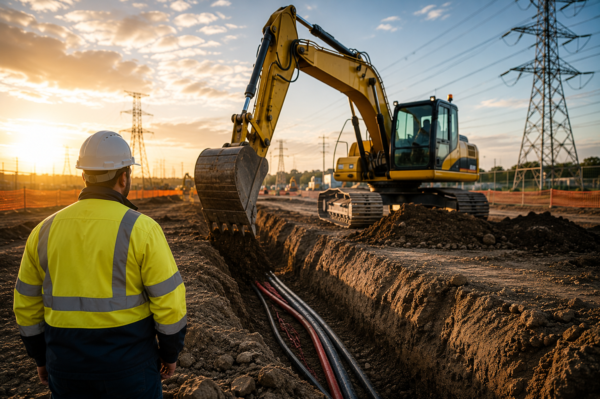
REALITY: Most serious electrical incidents involve people working near electricity rather than on electrical equipment.
Unlike most hazards, electricity cannot usually be seen, heard or smelled. Workers cannot tell whether a cable is energised, how far electricity may arc, or whether an underground service sits beneath the next bucket of soil. Experience alone cannot overcome an invisible hazard.
Why Incidents Keep Happening
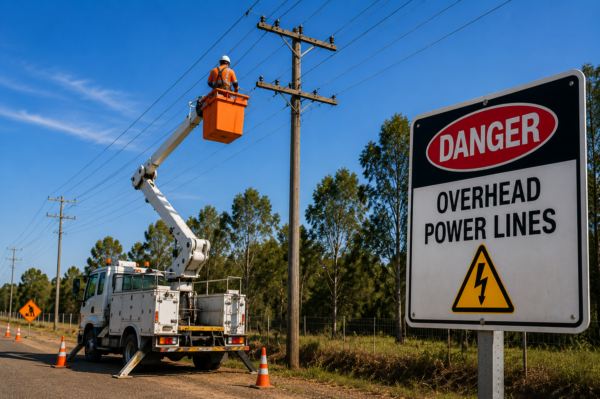
A civil crew begins excavation after reviewing plans. Unknown changes to underground services leave a live cable outside the expected alignment. An excavator damages the cable, creating an arc flash and placing everyone nearby at risk. The investigation later identifies multiple small failures — planning assumptions, communication gaps and inadequate hazard awareness — that combined into one major incident.
Five common contributing factors:
- Complacency created by routine work
- Incomplete identification of overhead and underground assets
- Poor understanding of exclusion zones and safe approach distances
- Breakdowns in communication between operators and spotters
- Limited understanding of arc flash, touch potential and step potential
Understanding The Invisible Hazards
Arc Flash: Electricity can jump through the air under certain conditions, creating extreme heat, pressure and light.
Touch Potential: Contact with an energised object can complete an electrical path through the body.
Step Potential: During an electrical fault, dangerous voltage differences can exist across the ground, meaning simply walking through the area may expose a worker.
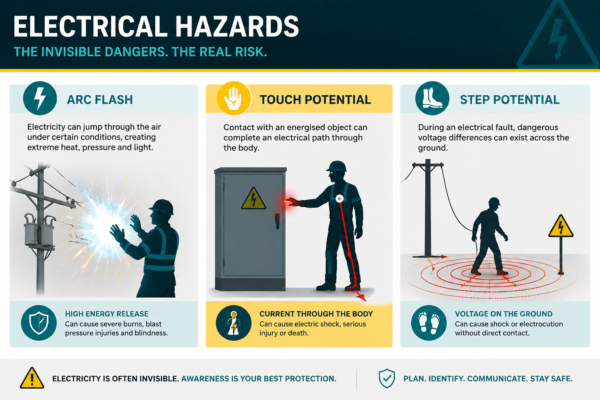
These are all examples of the wide array of risks that most workers are not aware of. Training provides the all-important understanding of the world around them, and the actions to take in mitigating risk to injury or death when working in the vicinity of electrical apparatus.
What Leading Organisations Do Differently
High-performing organisations:
- Identify electrical assets before work starts
- Complete site-specific risk assessments
- Consult utility owners where required
- Use competent safety observers and clear communication
- Review changing site conditions throughout the day
- Train workers before they are exposed to the hazard
- Empower workers to stop work if conditions become unsafe
What The Statistics Tell Us
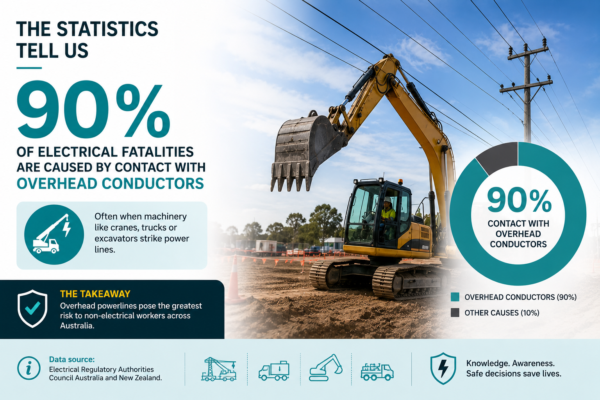
Contact with overhead conductors accounts for roughly 90% of all fatalities associated with electricity supply networks, often when machinery like cranes, trucks or excavators strike lines. This further illustrates the severe level of risk that this poses to non-electrical workers across Australia.
Data source: Electrical Regulatory Authorities Council Australia and New Zealand.
Key Takeaway
Electrical incidents are rarely caused by one catastrophic mistake. They are usually the result of several small decisions that line up at exactly the wrong moment. Knowledge helps workers recognise those warning signs before an incident occurs.
Taking what you now know and the statistics above, it’s clear that effective training plays a pivotal role in addressing this hazard going forward.
Building A Safer Workforce
Make training your top priority as you look to reduce or eliminate electrical incidents. Kallibr’s nationally recognised online course, UETDREL006 — Work Safely in the Vicinity of Live Electrical Apparatus as a Non-Electrical Worker, builds practical knowledge for people working around overhead and underground electrical infrastructure.
Rather than focusing on electricians, it’s designed for the non-electrical workforce that faces these hazards every day across civil construction, utilities, telecommunications, transport and infrastructure projects.
Additional Resources
- SafeWork NSW electrical safety resources: safework.nsw.gov.au/hazards-a-z/electrical-and-power
- WorkSafe Queensland: worksafe.qld.gov.au/about/who-we-are/electrical-safety-office
- Energy Safe Victoria: energysafe.vic.gov.au
- Energy Networks Australia: energynetworks.com.au/guidelines